
What is A Hybrid Church?
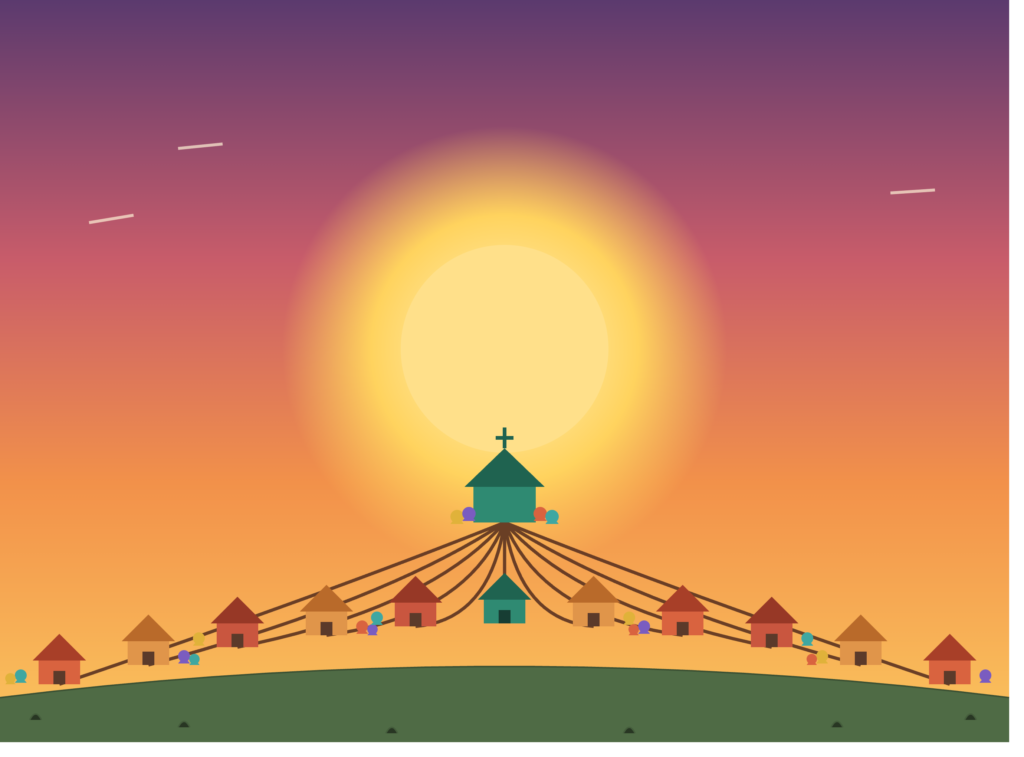
So God has called you to plant churches, right? Does that mean you have to choose between building a Sunday gathering with a building and staff, or planting a network of house churches with virtually no overhead? We don’t see those as competing models. A true hybrid church allows both to coexist and flourish — a Sunday gathering that looks like almost any prevailing-model church you’ve ever visited, anchoring and unifying a growing network of house churches where disciples make disciples and churches plant churches.
So what actually separates a true hybrid church from a prevailing-model church, if the Sunday gathering can look the same either way? It comes down to vision — and, more specifically, to how each one measures success. A prevailing-model church and a hybrid church can share the same Sunday morning, the same building, even the same worship set. But ask each one what “winning” looks like, and you’ll get very different answers. That difference in scorekeeping is what actually determines whether a church stays put or multiplies — and it’s the question this whole post is built around.
This isn’t just theory. Neighbors & Nations church in Buena Park just celebrated five years living out this exact model. They have a “prevailing model” Sunday gathering — but it’s built on top of a growing network of house churches where disciples make disciples. And these house churches plant new house churches. Following is Pastor Jeff (JT) Timblin’s account of what this has looked like.
Five Years In: A Case Study
Two Congregations: One Vision
“A few weeks ago, Neighbors & Nations Church celebrated its fifth anniversary. Wow! Did God really bring two congregations together to form one church with a vision to unleash the priesthood of believers by raising up leaders to own the core missionary task of making disciples who make disciples? Yes! The vision of Neighbors & Nations is to ‘advance God’s Kingdom by equipping and empowering disciples of Jesus to our neighbors and the nations.’ This is not just a slogan on paper — we believe this is the path God has called us to best live out The Great Commission in Matthew 28:18-20 ‘And Jesus came and said to them, “All authority in heaven and on earth has been given to me. Go therefore and make disciples of all nations, baptizing them in the name of the Father and of the Son and of the Holy Spirit, teaching them to observe all that I have commanded you. And behold, I am with you always, to the end of the age.”‘”
Why We Do It This Way
“The vision of our leadership team has always been to do our best in following the pathway of church outlined in Ephesians 4. We wanted a leadership team that would ‘equip the saints for the work of service.’ We believed God wanted us to offer everyone a pathway to be trained and then unleashed to go and make disciples that make disciples and plant churches that plant churches. This is the model of multiplication we see throughout the New Testament. Our leadership has set aside any past priority for increasing: attendance, buildings, programs, and staff for the Church — to follow the Antioch model in Acts that instead gave away (sent out) their best — Paul & Barnabas. The leaders in Antioch understood that God’s heart was to increase His Kingdom rather than to put all of their resources and focus into a local church community.”
What God Has Done
“Five years into this vision, we have seen many people surrender to Jesus and be baptized. We have also observed many house churches planted from Compton to Aliso Viejo. We have launched a large number of families into the mission field on five different continents. Our Sunday gatherings continue to celebrate Jesus with corporate worship, teaching, and fellowship. We see those Sunday morning meetings as ‘the gathering of churches.’ It is the place where the many house churches can come together as one larger body. There are so many ministries, stories, and changed lives that it would take many, many pages to explain them all. The bottom line is — God gave us a vision — and now, five years into that vision, we see it happening. We’re so blessed to be a part of it.”
— JT Timblin, Neighbors & Nations
We Measure Differently
A typical prevailing-model church tracks what’s countable: attendance, giving, and building capacity. Some of the more current trends broaden their scope to include first-time visitors, baptisms, and levels of engagement. All reasonable things to watch.
But a church built for multiplication asks a different set of questions. Too often the metrics that work for a single large congregation can quietly work against “sending.” Those congregations optimized primarily for attendance growth tend to concentrate their best people and resources at the center. Congregations built for multiplication keep giving their best people away! Just like the church in Antioch sent Barnabas and Paul instead of keeping them close and building a ministry around them. Look at it this way:
A Prevailing-Model Church Tends to Ask
- How many people attended this weekend (in person and online)?
- How much did we give, and did it grow year over year?
- What percentage of first-time guests took a next step — joined a group, started serving, pursued membership?
- How many baptisms or decisions for Christ this year?
- Are our best leaders and volunteers staying and deepening their involvement here?
A Hybrid Church Tends to Ask
- How many house churches are underway right now?
- How many new leaders have been raised up and sent to lead one?
- Are those house churches healthy enough to plant house churches of their own?
- Are our best people being released to lead elsewhere, rather than absorbed into the center?
- Is the harvest reaching new neighborhoods and people groups the Sunday gathering alone couldn’t reach?
The first list measures whether people are gathering and staying. The second measures whether people are being sent. Both matter — a hybrid church still cares about its Sunday gathering — but the second list is the one that determines whether a church multiplies or simply grows.
Neighbors & Nations currently has eleven house churches underway, from Compton to Aliso Viejo — that’s the number this church is actually tracking.
The Takeaway
In the Neighbors & Nations story, we can see what’s possible when a church refuses to choose between gathering and multiplying. In only five years, their single Sunday service has become the meeting point for a growing web of house churches across Southern California — each one making disciples who make disciples. If you sense a call to this kind of ministry but aren’t sure how to build it, take a look at Ephesus House. It’s a residential training opportunity for young men and women to have hands-on experience in learning these principles.